
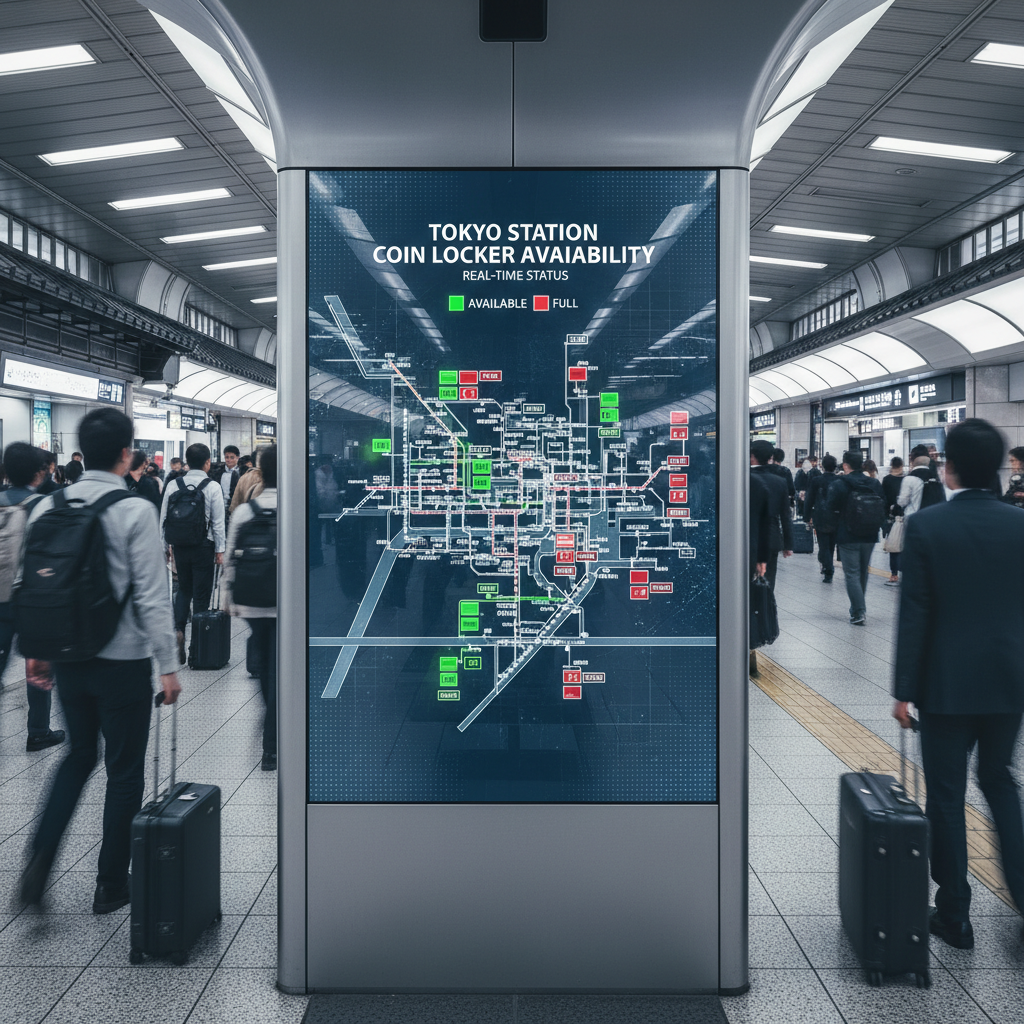
Navigating the labyrinth of Tokyo Station with heavy bags is a challenge no traveler wants to face. Understanding the Tokyo Station coin locker availability status is critical for a seamless journey, whether you are catching a Shinkansen to Kyoto or exploring the Imperial Palace. With over 2,000 lockers scattered across multiple floors and exits, finding an empty slot requires more than just luck; it requires strategy and the right digital tools.
This comprehensive guide deconstructs the mechanisms of locker availability, from real-time tracking systems to peak-hour survival strategies, ensuring you never waste time searching for storage in Japan’s busiest rail hub.
Real-Time Availability Tools and Methods
The days of wandering aimlessly from the Marunouchi to the Yaesu side are over. Modern infrastructure allows travelers to check availability before even stepping off the train. The primary mechanism for this is the Locker Concierge system.
The “Locker Concierge” service is a key tool for checking Tokyo Station coin locker availability. It aggregates data from sensor-based networks, providing real-time vacancy information. You can access this service via a dedicated website or through in-station kiosks. The website typically displays a map with color-coded indicators (e.g., green for available, red for full) for different locker banks. Kiosks, usually found near major ticket gates, offer a similar visual representation on a floor plan. This digital approach significantly reduces the time and frustration associated with finding an available locker.
How to Check Status Digitally
Tokyo Metro and associated operators have integrated sensor-based networks that broadcast locker vacancy data. The “Locker Concierge” service (accessible via web and dedicated kiosks) aggregates this data.
• Web-Based Checking: Travelers can view real-time maps showing “Full,” “Few Left,” or “Available” indicators for specific locker banks.
• In-Station Kiosks: Located near major ticket gates, these touchscreens provide a floor-plan view of nearby locker clusters.
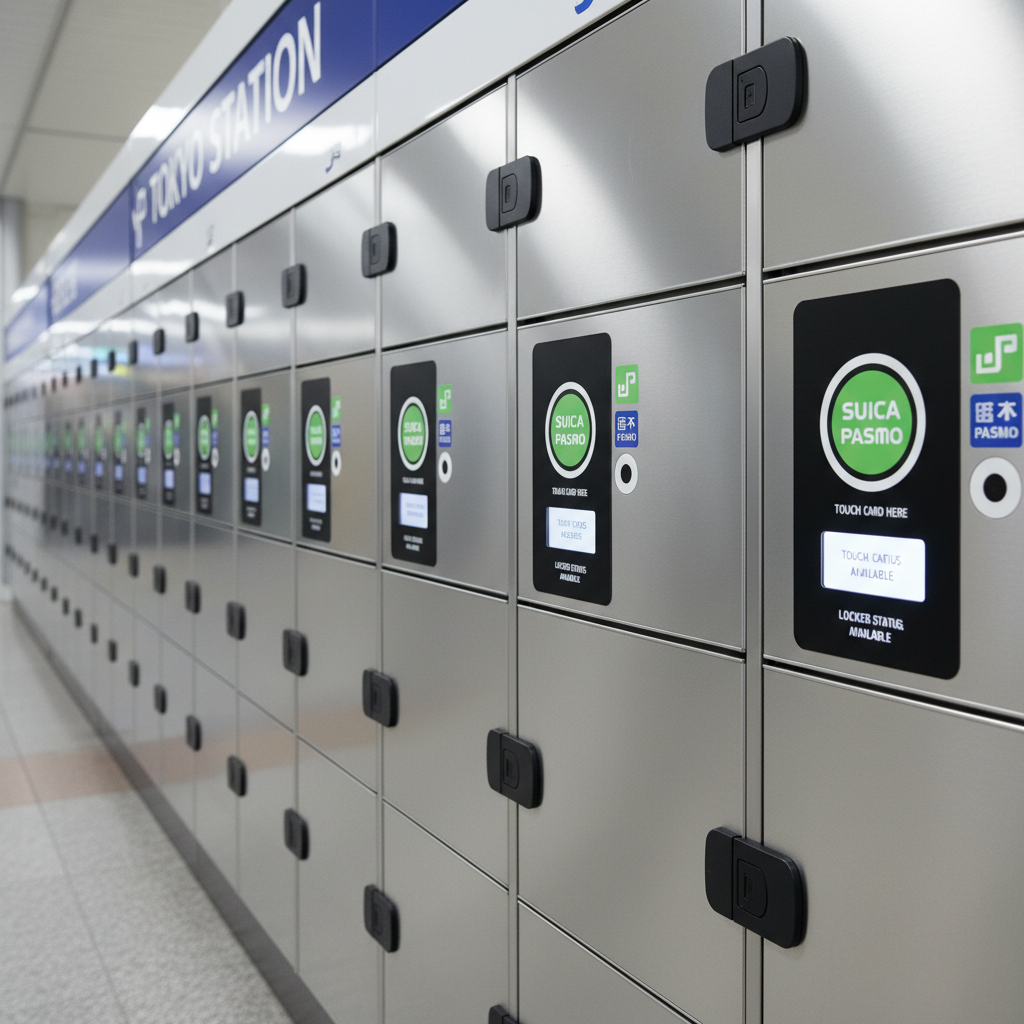
• Suica/Pasmo Integration: The system often ties into the payment network, updating status the moment an IC card locks or unlocks a door.
Managing luggage in a massive hub like Tokyo requires similar foresight to navigating Geneva Airport train station lockers, where demand often outstrips supply during peak seasons.
Interpreting Availability Indicators
Understanding the data is just as important as finding it. The status indicators generally follow these thresholds:
| Status Indicator | Estimated Availability | Action Required |
|---|---|---|
| O (Green) | > 30% Empty | Proceed directly to this location. |
| △ (Orange) | < 10% Empty | Hurry; high risk of filling within 10 minutes. |
| X (Red) | 0% Empty | Do not attempt; seek alternative floors or manned storage. |
Key Locker Locations and Capacity Analysis
Not all locker areas are created equal. Tokyo Station is vertically segregated, and availability often correlates with vertical distance from the Shinkansen gates.
Yaesu North Exit (1F): High-Demand Zone
Located immediately adjacent to the Shinkansen tracks, this area is the most convenient but also the most volatile.
• Capacity: Approximately 244 lockers.
• Mix: Heavily skewed toward Large (L) sizes for suitcases.
• Fill Rate: Often hits 100% by 9:00 AM on weekdays and earlier on holidays.
Data indicates that while convenient, relying on the Yaesu North Exit without a reservation or early arrival is risky. MATCHA reports Tokyo Station offers over 100 coin lockers in this vicinity, but they are the first to disappear.
South Transfer Plaza (B1F): The Underground Hub
For those willing to descend, the B1F South Transfer Plaza offers the highest volume of storage. This area serves as a central overflow reservoir for the station.
• Capacity: Over 1,000 lockers (SS, S, M, L).
• Accessibility: Connected to the Marunouchi underground passage.
• Strategy: Even when 1F is full, B1F often retains availability in the “Small” and “Medium” categories.
Sobu Line Area (B4F): Deep Storage
Located near the Narita Express and Sobu Line platforms, this area is physically distant from the main concourse. Because of the trek required to reach it, it frequently maintains availability when upper floors are at capacity.
While the scale differs, the rush for storage mirrors the situation with Lockers at Waterloo train station, emphasizing the need for early arrival or utilizing less obvious locations.
Locker Sizes, Prices, and Specifications
Matching your luggage to the correct locker size is essential to avoid paying for unnecessary space or finding your bag doesn’t fit. Tokyo Station utilizes a standardized sizing system, though dimensions can vary slightly by manufacturer.
Understanding the different locker sizes and their corresponding prices is crucial for efficient storage at Tokyo Station. The station offers a range of sizes from Extra Small (SS) to Extra Large (LL), catering to various luggage needs. For instance, SS lockers are suitable for small bags, while LL lockers can accommodate larger items like skis or musical instruments. Prices typically vary based on size, with smaller lockers being more affordable. It’s important to note that these prices are usually per calendar day, meaning the charge resets at midnight. Always check the dimensions and price displayed at the locker bank before making your selection to ensure it meets your requirements and budget.
Standard Dimensions and Fees (2025 Estimates)
| Size Category | Approx. Dimensions (H x W x D) | Price (per day) | Ideal For |
|---|---|---|---|
| SS / Extra Small | 25cm x 35cm x 57cm | ~400 JPY | Handbags, shopping bags |
| S / Small | 31cm x 35cm x 57cm | ~500 JPY | Backpacks, day packs |
| M / Medium | 55cm x 35cm x 57cm | ~600 JPY | Carry-on suitcases (cabine size) |
| L / Large | 84cm x 35cm x 57cm | ~800 – 900 JPY | Large check-in suitcases |
| LL / Extra Large | 103cm x 35cm x 57cm | ~1,000 JPY | Ski gear, musical instruments |
Note: Fees are typically charged per calendar day, meaning the fee resets after midnight (usually around 1:30 AM or 2:00 AM depending on the specific locker bank).
Payment Methods and Technology
Tokyo Station is a leader in cashless integration. While older key-based lockers exist, the majority have migrated to digital systems.
When using coin lockers at Tokyo Station, you’ll find a variety of convenient payment methods. The most common and recommended method is using an IC card, such as Suica, Pasmo, or ICOCA. Simply tap your card on the locker’s interface to pay and lock it; your card then acts as the digital key. For those without an IC card, cash payment is also an option, typically accepting 100 yen coins and sometimes 1,000 yen bills through designated kiosks. These kiosks will issue a receipt with a PIN or QR code for retrieval. While some newer models may accept direct credit card payments, relying on IC cards or cash is generally the most reliable approach.
IC Cards (Suica, Pasmo, ICOCA)
The most efficient way to pay is using an IC card.
- Touch to Pay: Select your locker on the screen and tap your card.
- Digital Key: Your IC card becomes the key. No physical ticket is issued.
- Retrieval: Simply return to the locker and tap the same card to open it.
Cash and PIN Codes
For travelers without an IC card, cash kiosks are available.
• Currency: 100 yen coins are standard; some kiosks accept 1,000 yen bills.
• Receipt: The machine prints a receipt with a QR code or PIN.
• Warning: Do not lose this receipt. Reissuing a lost code involves calling support and verifying identity, which can take hours.
According to Live Japan’s practical guide, using an IC card is strongly recommended to avoid the hassle of physical keys or paper slips.
Rules, Limits, and Prohibited Items
Strict regulations govern the use of public storage in Japan for security and operational efficiency.
Storage Duration Limits
• Maximum Stay: Generally 3 days (72 hours).
• Overstay Consequence: After 3 days, station staff remove the contents. Items are moved to a central lost-and-found facility for a limited period (often 30 days) before disposal.
• Retrieval Fee: To claim removed items, you must pay the outstanding storage fees plus an administrative handling fee.
Prohibited Items
JR East regulations strictly forbid storing the following:
• Valuables: Cash, securities, jewelry.
• Hazardous Materials: Flammables, explosives, toxic substances.
• Perishables: Fresh food that may spoil or emit odors.
• Animals: No pets allowed.
For those used to simpler systems like Santa Barbara train station luggage storage, the digital interfaces and strict time limits at Tokyo Station might seem complex, but they offer superior security and turnover rates.
Alternatives When Lockers Are Full
During Golden Week, New Year’s, or cherry blossom season, the “Tokyo Station coin locker availability status” may read “Full” across the board. In these scenarios, you need a backup plan.
Ecbo Cloak and Manned Storage
Services like ecbo cloak connect travelers with shops, cafes, and hotels that have spare space for luggage.
• Reservation: You can book space in advance via their app.
• Capacity: often accepts oversized items that don’t fit in standard lockers.
• Security: Items are stored in staff-only areas.
Ecbo cloak partners with Tokyo Station-area stores to provide a reliable alternative when automated lockers are at capacity.
JR East Travel Service Center
Located at the Marunouchi North Exit, this manned center offers temporary baggage storage (Baggage Room).
• Pros: Can handle odd-shaped items.
• Cons: strict operating hours (usually 7:30 AM to 8:30 PM) and potential queues.
FAQ: Tokyo Station Coin Lockers
Can I reserve a coin locker at Tokyo Station in advance?
Yes, select lockers support reservation via apps like “To Locca” or specific JR East reservation services, though the majority are still first-come, first-served.
What happens if I lose my locker PIN code?
You must contact the call center listed on the locker unit. You will likely need to wait for staff to arrive (operating hours only) and pay a lost key/admin fee, often around 1,500 to 3,000 JPY.
Are there lockers for large musical instruments or skis?
Yes, “Extra Large” (LL) lockers exist but are very rare. Manned baggage storage or delivery services (Takkyubin) are better options for oversized items.
Can I use a credit card to pay for lockers?
Direct credit card payment at the locker is becoming more common on newer touchscreen models, but cash (coins) and IC cards (Suica/Pasmo) remain the most reliable methods.
Is it cheaper to use lockers outside the ticket gates?
Prices are generally standardized across JR East stations, but lockers outside the gates allow you to access your bags without paying a train fare, offering more flexibility for exploring the city.
Conclusion
Mastering the Tokyo Station coin locker availability status is about timing and location. By prioritizing the B1F underground plaza or B4F Sobu areas, utilizing IC cards for seamless payment, and checking real-time status maps, you can secure storage even during the busiest travel seasons. Remember that while the station offers thousands of units, the sheer volume of daily passengers makes availability fleeting. Always have a backup plan like ecbo cloak or manned storage to ensure your travel remains burden-free.